
Petitions enable the public to have issues they care about voiced in the Parliament and to request a course of action to address their concerns. Anyone who is resident in Tasmania can start or sign a petition: There are no restrictions based on citizenship, age or number of signatures.
All that is required is for the petition to follow the rules of the House of Assembly and for a Member to agree to sponsor it.
Petitions can be prepared on paper, online through the E-Petitions portal above, or in both forms. The process is slightly different for e-petitions and paper petitions. Information for paper petitions is available through the link below. This page will explain the process for initiating an e-petition.
E-Petitions F.A.Q.s
The member of the public who starts an e-petition is known as the Principal Petitioner.
Unlike a paper petition, an e-petition must have the support of a Member of the House at the point it is initiated. Sponsorship is required before it can be uploaded to the Parliament’s website.
Members of Parliament can sponsor e-petitions in their capacity as a representative: It is not required that they agree with the grievance expressed.
Contact details for current Members of the House can be found here.
Once a Member has agreed to sponsor the petition, an E-Petition Application form must be completed and sent by the Member to Parliamentary staff for uploading. The Member and Principal Petitioner will be notified when it is online and ready for signing.
The House of Assembly receives petitions presenting public or individual grievances relating to matters over which it has jurisdiction. The Australian Parliament has an outline of matters which are dealt with a state level – and therefore can be addressed to the House of Assembly – as well as those which belong to the local and federal levels. The Sponsoring Member would also be able to advise.
Petitions can not directly reference any debate in Parliament within the last twelve months. The exception is that Petitions may be presented which request a Bill or vote be rescinded.
Only one e-petition on the same subject can run at the same time.
While petitions often address contentious topics, it is required that they are respectful, decorous, and temperate in their language. Petitions must be free from any disrespectful reference to the Sovereign or the Governor, of offensive imputations upon the character or conduct of either House of Parliament, or the Courts of Justice, or other tribunal or constituted authority.
For further advice on any of these matters, please contact haprocedure@parliament.tas.gov.au.
Petitions must be no more than 250 words.
The petition should begin by addressing itself to the Speaker and Members of the House of Assembly, then outlining the cohort presenting the petition: For example, “We the undersigned residents of Tasmania” or “We the undersigned residents of Braddon.”
The petition should then state the facts which the petitioners wish to bring to the notice of the House.
It should then conclude with a request that the House do – or not do – something. Often, this takes the form of requesting that “the House call on the Government” to take a particular course of action where the Government (or executive) has responsibility for the issue, rather than the Parliament (or legislature).
Petitions cannot have additional documents attached to them.
Petitions that fall outside of these rules, for example those hosted on other petition platforms, can only be given to the Parliament as a tabled paper and will thus not receive a response from the Government.
An e-petition can run for a minimum of one week and a maximum of six months. The decision of when - within this window - to schedule the closing of the e-petition should be determined in discussion between the Principal Petitioner and Sponsoring Member
An e-petition can be signed by anyone who falls within the category of those outlined in the opening of the petition, typically “Residents of Tasmania” or residents of a particular area. There are no restrictions based on age or citizenship.
Signatures may be made in an individual capacity only e.g. a Chair of a public meeting can not sign on behalf of all attendees.
Except in cases of incapacity from sickness, the e-petition details must be filled in personally by the individual wishing to sign it.
The Principal Petitioner, their community, and the Sponsoring Member are responsible for promoting an e-petition. The House of Assembly’s only role is to facilitate the publication of e-petitions.
Under the Standing Orders, the name and address of the Principal Petitioner is required to be published. However, if it is preferable, the petition can be published as care of the Sponsoring Member’s Electorate Office.
Only the total number of signatures, not the names or details of signatories, is displayed online.
A paper copy of the e-petition is kept as a Tabled Paper of the House, but it is not uploaded to the website and copies are not permitted to be provided. Contact haprocedure@parliament.tas.gov.au for further detail.
The Conditions of Use include eligibility requirements, limitation to only signing each e-petition once, and a prohibition on using false names.
A breach of the Conditions of Use may amount to contempt of the House. Actions that may be considered to be a contempt of the House include:
- Presenting a forged or falsified document to the House or a committee;
- Submitting a petition containing false, scandalous or groundless allegations; or
- Inducing a person to sign a petition by fraud and misleading the House.
The petition can be tabled on any sitting day of the House [link to schedule], as agreed between the Sponsoring Member and Principal Petitioner.
Petitions are tabled following Question Time, which normally concludes around 11.15am. The Sponsoring Member will bring the petition into the House and the text of the petition will be read aloud to the House by the Clerk.
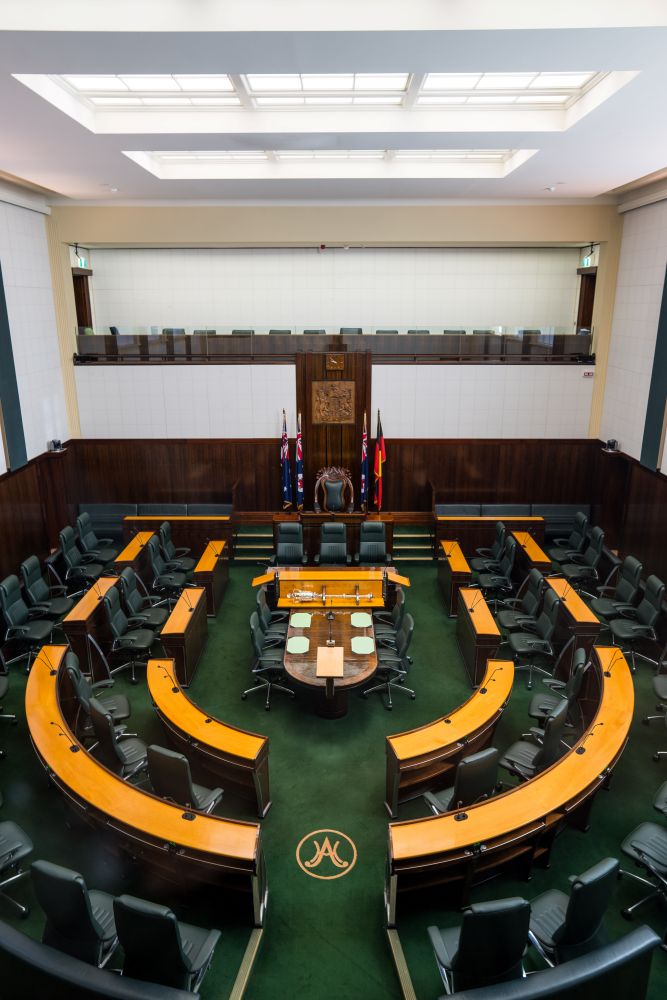
If you would like to watch the presentation of your petition, the House of Assembly public gallery is always open when the House is sitting. The Sponsoring Member may also be able to host you.
Once the petition is tabled, a copy of the text – without signatures – is forwarded to the Premier, and from there to the responsible Minister. The Minister is required to provide a response to the House within fifteen (15) sitting days.
This response will be uploaded to the e-petitions portal and sent to the Sponsoring Member and Principal Petitioner.
E-petitions can be continued and presented following the election. If the Sponsoring Member is not re-elected, another Member may agree to sponsor the e-petition. Please contact haprocedure@parliament.tas.gov.au for advice.