

The Speaker is one of two Presiding Officers in the Tasmanian Parliament. They are the most important Member of the House of Assembly. The Speaker has many roles, including running the meetings of the House of Assembly. The Speaker makes sure that the House follows correct parliamentary procedure and that debates are conducted fairly for all Members. Given the importance of their work, the Speaker is respected by all Members of Parliament.

The current Speaker of the House is the Honourable
Jacquie Petrusma MP. She was elected to the role on
19 August 2025.
What does the Speaker do?
Work in the Chamber
During sittings of Parliament, the Speaker makes sure that the House of Assembly follows its written rules, the Standing Orders. The Speaker also makes sure that all Members have a opportunity to speak on matters before the House.
Other responsibilities
The Speaker is the main spokesperson for the House of Assembly. They play an important official role as a representative of the Tasmanian Parliament at meetings, functions, and ceremonies. Along with the President of the Legislative Council, the Speaker is responsible for the administration of the Parliament. The Speaker also represents their electorate and has an electorate office to assist them with this role.
How is the Speaker chosen?
At a House of Assembly election, Tasmanians vote for people to represent them in Parliament. Once elected, the House of Assembly Members vote amongst themselves for one Member to become the Speaker of the House. The Speaker is usually someone who has a lot of parliamentary experience. The Speaker is normally a member of the Government, but when they take on the role of Speaker they make an oath to be impartial. This means they will treat all Members equally and will not favour one party over another.
Traditions and History of the Speaker
Election
When the Speaker is elected to the position, they are "dragged" to the Chair by the two Members who nominated them. In reality, the Members take the Speaker's arms and lead them to the Chair. This strange tradition comes from the history of the role of Speaker in England hundreds of years ago. The Speaker's job of reporting the decisions of the Parliament to the monarch sometimes brought them into great danger and 7 speakers were beheaded for doing their job from 1394 to 1535. No one wanted to be the Speaker under these circumstances.
Robe
The Speaker can choose to wear a black robe to show they are impartial, meaning they will treat everyone equally. The Speaker's robe is based on traditional court dress from the United Kingdom. In the past the Speaker's full regalia included a full-bottomed wig and a lacy collar called a jabot.
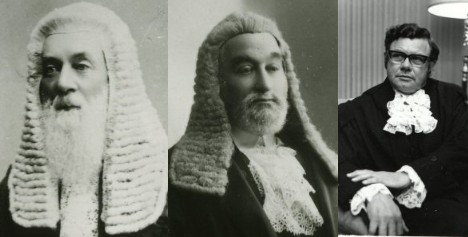
Speakers Thomas Reibey (1887-1891), John George Davies (1903-12) and Eric Barnard (1972-75)
Procession
Every sitting day, the Speaker is escorted into the House of Assembly Chamber by the Sergeant-at-Arms carrying the Mace. This is again a reminder of more turbulent times when the Speaker needed the protection of the Sergeant-at-Arms.